Pepe Kalle
About Pepe Kalle
Jean-Baptiste Kabasele Yampanya wa ba Mulanga (30 November 1951 – 29 November 1998), known professionally as Pépé Kallé, was a Congolese singer-songwriter, bandleader, and performer. Noted for his robust, throaty baritone voice, he was a significant figure in the evolution of soukous and was referred to by various nicknames, among them the "elephant of Zaire music", "La Bombe Atomique", and "the elephant of African music". Before entering the music industry professionally, he composed songs that he sold to various bands to finance his education while also participating in the group African Choc, alongside Papy Tex. His early recordings also brought him into contact with influential veterans such as Le Grand Kallé, whose work played an important role in shaping Congolese rumba and influenced Pépé Kallé's musical direction.
Pépé Kallé's first breakthrough came in the late 1960s, when he joined Orchestre Bamboula under guitarist Papa Noël Nedule. He later performed with several groups in the early 1970s, including Orchestre Myosotis, Bella Bella, and Orchestre Vévé, where he provided lead vocals to Verckys Kiamuangana Mateta's socially conscious hit "Nakomitunaka". In March 1973, he became one of the founding bandleaders of Empire Bakuba, which later emerged as one of the most influential bands in Congolese popular music. Alongside Dilu Dilumona and Papy Tex, he helped develop a style that blended rumba, sebene guitar sections, and theatrical live performances. The band's popularity in Zaire rose sharply after the release of the hits "Dadou" in 1978 and "Zabolo" in 1982. During the mid-1980s, Empire Bakuba signed with Senegalese producer Ibrahima Sylla's Syllart Production, and Pépé Kallé collaborated with fellow Congolese singer-songwriter Nyboma on the albums Zouke Zouke (1986) and Moyibi (1988), which fused soukous with zouk and achieved broad popularity in Francophone Africa and the French Caribbean. In 1987, he made his acting debut in the film La Vie est Belle.
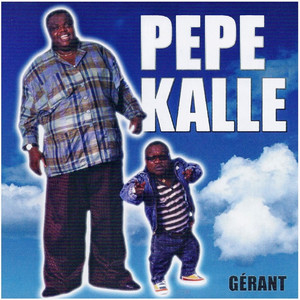
Pépé Kallé was noted for his multi-octave vocal range and large physical stature, standing about 190 centimetres (75 in) tall and weighing over 136 kilograms (300 lb). Music critic Martin Enyimo noted that the contrast between Pépé Kallé's stature and the energetic performances of Empire Bakuba's dwarf dancers made the group especially visually distinctive on stage. Alongside his work with Empire Bakuba, he also pursued a solo career through several records. The 1989 albums Pon Moun Paka Bougé and Cé Chalè Carnaval helped popularize the modern générique, a style centered on long, dance-oriented sebene sections and choreographed performances. He died in Kinshasa on 29 November 1998, after suffering a heart attack.
Stats
- 10,533 listeners
- 59,671 plays